

Why Do Dark Spots Take So Long to Fade?
The Dark Spot That Overstays Its Welcome
There's a reason some dark spots seem determined to stick around.
Post-inflammatory hyperpigmentation, commonly called PIH, occurs when inflammation or injury triggers excess melanin production. Acne, irritation, eczema, and even a small blemish can leave behind discoloration long after the skin has healed.
And while hyperpigmentation can affect anyone, it is particularly common and often more noticeable in deeper skin tones.
How long a mark remains depends on several factors, including the depth of the pigment, the intensity of the original inflammation, ongoing irritation, and exposure to sunlight.
Superficial discoloration may gradually fade over several months. Deeper pigmentation can take considerably longer.
In other words, the blemish may be temporary, but its memory can linger.
When Hormones Enter the Conversation
Sometimes the story behind persistent dark spots is more complicated than a breakout.
Hormonal changes can contribute to acne, which may subsequently lead to post-inflammatory hyperpigmentation. For women living with polycystic ovary syndrome (PCOS), recurring hormonal acne can make managing dark marks especially frustrating.
It's important, however, to distinguish between different types of skin discoloration. PCOS can also be associated with insulin resistance and a condition called acanthosis nigricans, which causes areas of skin to become darker and sometimes thicker or velvety. This is different from the marks left behind by acne.
Not every dark spot has the same cause, and not every type of pigmentation responds to the same skincare approach.
That's why understanding what's happening beneath the surface matters.
What Can Four Weeks of Consistency Really Show Us?
At Clay & Olive Skincare, we invited ten women to participate in a four-week experience using our Vitamin C Serum. Eight completed the testing period, giving us an opportunity to observe their experiences with the formula.
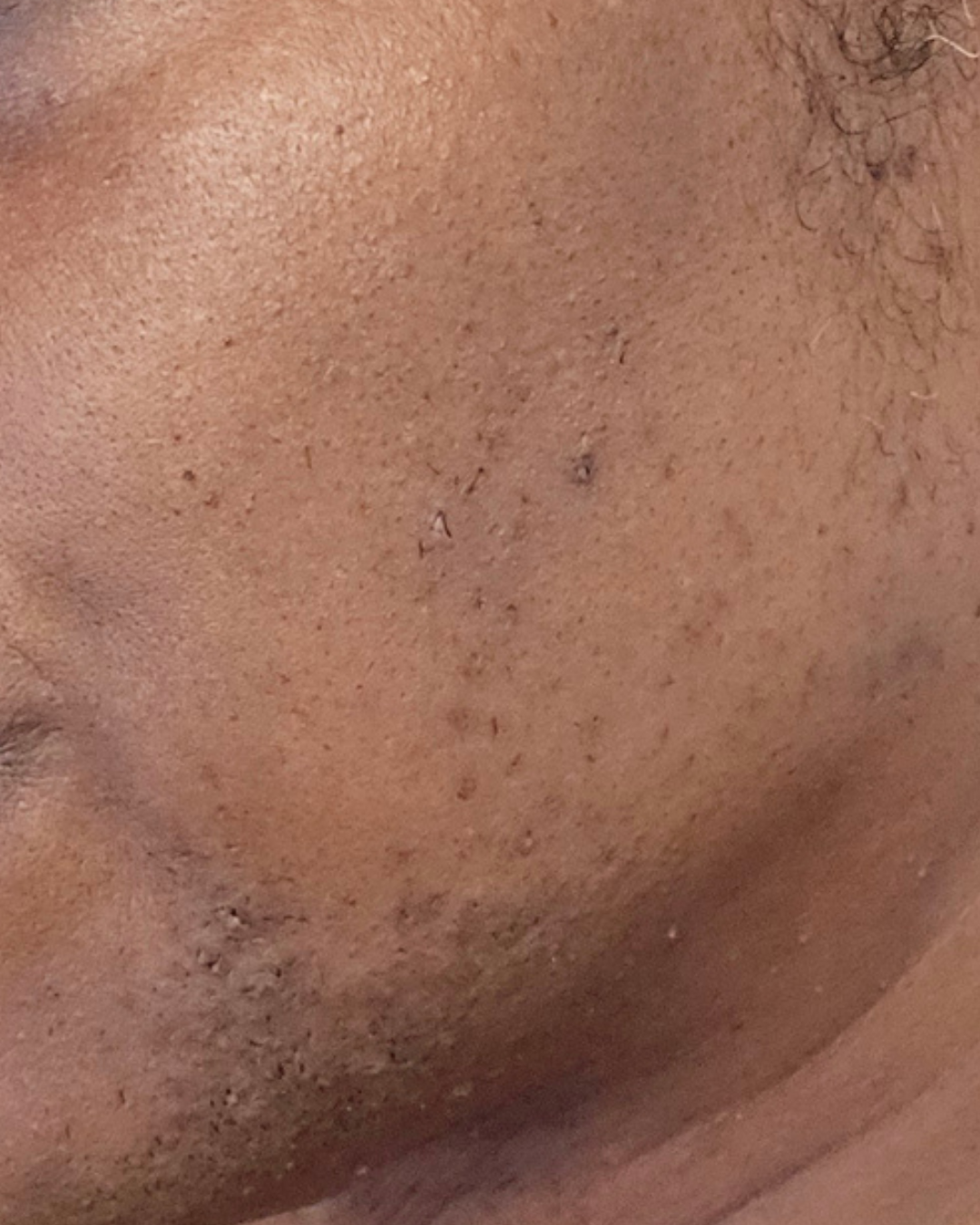
One participant, who shared that she lives with PCOS, provided before-and-after photographs documenting her skin over four weeks.

(Four-week participant experience with Clay & Olive Skincare's Vitamin C Serum. Individual experiences and results vary.)
The photographs offer a look at her individual skincare journey. They are not evidence that the serum treats PCOS or that everyone will experience the same changes. But they do illustrate why we were interested in documenting real experiences rather than relying solely on promises.
Four weeks is a relatively short window in the life of a dark spot. Meaningful changes in the appearance of hyperpigmentation often take longer, and progress isn't always linear.
Can Vitamin C Help Fade Dark Spots?
Vitamin C is widely used in skincare because certain forms can help reduce the appearance of uneven pigmentation and support a brighter-looking complexion over time.
But not every vitamin C formula is the same.
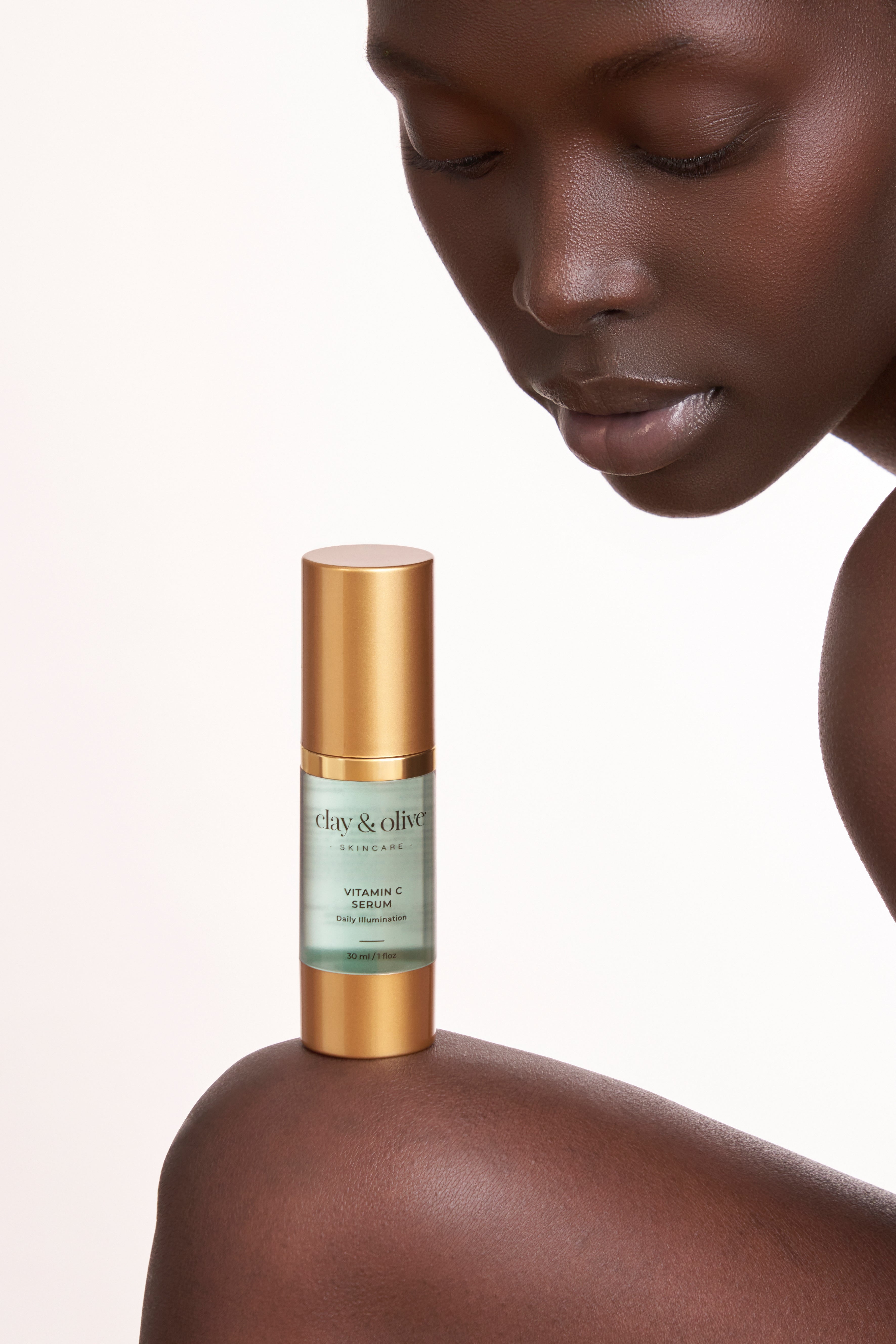
Clay & Olive Skincare's Vitamin C Serum features stabilized vitamin C, paired with ferulic acid, vitamin E, and resveratrol. Its airless packaging is designed to help protect the formula from repeated exposure to air.
These formulation choices are part of our approach to thoughtful skincare. Still, the results someone experiences will depend on their skin, the underlying cause of discoloration, the rest of their routine, and how consistently they use the product.
A serum can be one part of a skincare routine. It isn't a substitute for addressing recurring acne, hormonal concerns, or other conditions contributing to pigmentation.
Could You Be Doing Too Much?
When a dark spot refuses to fade, it's tempting to do more.
Another exfoliating treatment. A stronger active ingredient. A new product promising faster results.
But aggressive exfoliation and repeated irritation can contribute to inflammation, potentially making post-inflammatory hyperpigmentation worse.
Sometimes the more thoughtful approach is a simpler one: gentle cleansing, adequate moisturizing, carefully selected treatments, and consistent sun protection.
Daily broad-spectrum sunscreen with SPF 30 or higher is especially important because ultraviolet exposure can darken existing marks. For some pigmentation concerns, tinted sunscreen containing iron oxides may offer additional protection against visible light.
If you're constantly switching products, it can also become difficult to understand what's helping and what's irritating your skin.
As we explored in our previous Skin & Soul article, Have We Been Doing Too Much to Our Skin?, more isn't always better.
What Actually Helps Hyperpigmentation Fade?
There isn't one universal timeline or one perfect product. But a few habits can support a more thoughtful approach.
-
Identify the trigger. If acne or irritation continues, new dark marks may keep developing.
-
Protect your skin from the sun. Consistent sunscreen use helps prevent existing discoloration from becoming darker.
-
Support your skin barrier. Gentle cleansing and moisturizing can help reduce unnecessary irritation.
-
Choose ingredients intentionally. Vitamin C and other pigmentation-focused ingredients may help, depending on the cause and formulation.
-
Give your routine time. Visible improvement often takes months rather than days.
For persistent, changing, or unexplained discoloration, a dermatologist can help identify the cause and recommend appropriate treatment.
A Little Patience Goes a Long Way
Perhaps the hardest part of managing hyperpigmentation is accepting that our skin doesn't always work on our preferred timeline. We want the evidence of yesterday's breakout gone by tomorrow. We want to see progress every time we look in the mirror.
But caring for our skin isn't always about doing more or finding the next miracle ingredient.
Sometimes it's about understanding what's happening, making thoughtful choices, and giving those choices time.
And that one rogue dark spot? It may need a little more patience than we'd like.

Leave a comment
All comments are moderated before being published.
This site is protected by hCaptcha and the hCaptcha Privacy Policy and Terms of Service apply.